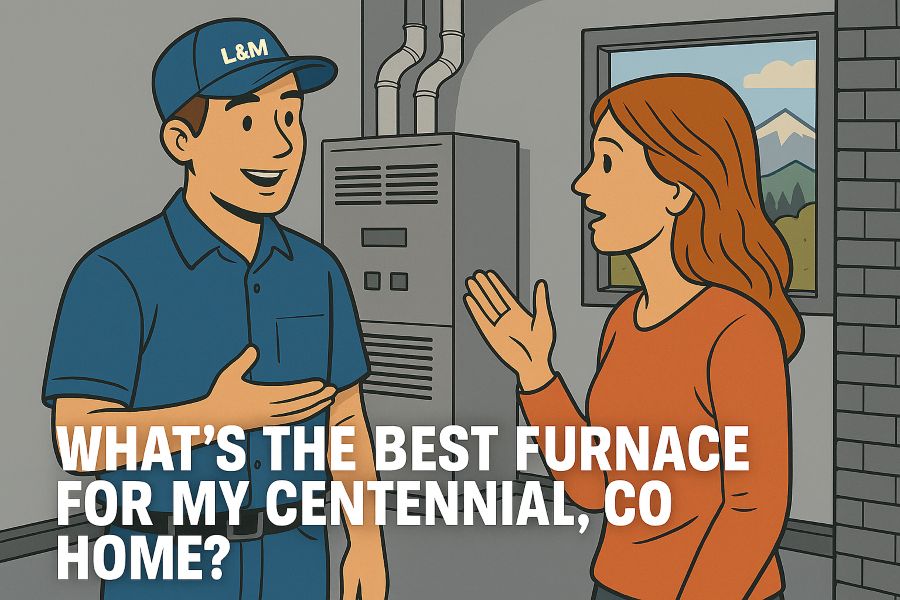
Winter is quickly approaching in Colorado, and now’s the time to make sure your heating system can keep up. If your old system is on its last leg – or you’re ready to upgrade to a high-efficiency system – but feel overwhelmed by the choices, we’re here to help.
In this guide, we cover how furnaces work, compare fuel types, explain what to look for when selecting a new system, and introduce an alternative that more Centennial homeowners are choosing each year: the modern heat pump.
How Do Furnaces Work?
Every furnace does the same basic job: it pulls in cool indoor air, warms it using an exchanger or heating element, and circulates it back through your home. The key difference lies in the type of fuel used during heating. Here’s a breakdown of the four main furnace fuel types used in American homes:
| Furnace Fuel Types: A Comparison of the Four Most Common Options | |||
|---|---|---|---|
| Fuel Type | Description | Pros | Cons |
| Natural Gas | The most widely used fuel source in the U.S. is Natural gas, which ignites in a combustion chamber to heat an exchanger, which then warms the air. |
|
|
| Oil | Used in rural places without natural gas access and in very cold climates like Alaska and the Northeast. It works like a natural gas furnace, but uses oil for ignition. |
|
|
| Propane | Often used where natural gas lines and/or oil aren’t available. Most natural gas furnaces can be converted to propane. |
|
|
| Electric | Used in about 10-15% of U.S. homes. Uses an electric heating element to warm the air. |
|
|
Centennial homeowners most often rely on natural gas because it’s affordable, performs well in Colorado’s cold winters, and is readily available throughout the state. But fuel type is only the first decision; you’ll also want to consider system specs, efficiency, features, and your unique heating needs.
How to Select the Right Furnace for Your Centennial Home
Choosing a furnace is about finding a system that fits your home, comfort preferences, and long-term budget. Here’s what to consider:
- Warranty
Choose a furnace that comes with a strong manufacturer’s warranty. Pay attention to duration, equipment covered, what’s not covered (often shipping and labor), and any hidden exclusions. We exclusively install Rheem products because they offer some of the best warranties in the industry.Pro Tip: A high-quality furnace can last 15 years or more with proper maintenance. If a company only warranties their systems for a few years, that might be an indication that they don’t build them to last. Aim for a 10-year or longer warranty.
- Budget
While cost matters, the lowest upfront price doesn’t always mean the best value. A cheaper furnace might cost you more in the long run with higher energy bills, frequent repairs, or a shorter lifespan. Try to strike a balance between affordability and reliability.Pro Tip: Consider more than the price tag. High-efficiency furnaces are more expensive initially, but the energy savings quickly offset the higher upfront costs. They’re also more environmentally friendly than their lower-efficiency counterparts.
- Energy Efficiency
A furnace’s efficiency is measured by its AFUE (Annual Fuel Utilization Efficiency), which is the ratio of heat output to fuel consumed. It can vary anywhere from 56% for older, low-efficiency furnaces to 100% for electric furnaces. Most modern gas furnaces range from 80% to 98% AFUE.Pro Tip: If you plan to stay in your home for several years, investing in a high-efficiency furnace (95%+ AFUE) is a smart investment that can noticeably reduce heating bills, especially during Centennial’s cold winters.
- Heating Stages
A furnace’s heating stage describes how many levels of heat output it has, which directly affects emergency efficiency and comfort consistency.- Single-Stage - The most affordable option upfront, but it operates at full capacity every time it turns on, decreasing efficiency.
- Two-Stage - Has a high and low setting, running on low most of the time and ramping up to 100% only when needed. This can save a lot of energy during milder Centennial winter days.
- Modulating - Adjusts heat output in small increments from 30% to 40% and up to 100%, learning your heating habits and adjusting over time for maximum comfort and efficiency.
Pro Tip: Modulating furnaces offer the best comfort and longevity (lower output levels = less wear and tear on the system), but many homeowners find two-stage systems hit the sweet spot between performance and cost.
- Home Factors
Your home’s layout, age, and existing systems all play a big role in determining which type of furnace will work best.- Size of Home - Buying the right furnace size (measured in BTUs) is critical. Undersized furnaces struggle to maintain comfortable temperatures; oversized units waste energy.
- Existing Ductwork - If your home lacks a proper ductwork system, your options will be more limited, and leaky or undersized ductwork can stress a new system. Have your ductwork inspected before installation.
- Solar Panels - If you’re one of the many Colorado homeowners who have solar panels, an electric or hybrid system might make the most sense.
- Add-On Needs - Budget for any add-ons you’ll need for comfort, including a whole-house humidifier for Colorado's dry winters.
Pro Tip: Older Centennial homes often benefit from adding a ductless mini-split system to eliminate cold spots and improve overall comfort.
- Reviews and Reputation
Before you commit, research both the furnace brand’s reputation and the installer. Even a top-rated furnace will underperform if installed incorrectly (and it could even void its warranty). Research the brand’s reputation and read reviews for that specific furnace, including the brand’s customer service and any common themes in negative reviews.Pro Tip: Read local reviews, ask neighbors, and choose an installer with a proven reputation. At L&M HVAC, we’re proud to be Centennial’s trusted local HVAC provider with consistent five-star reviews.
If the options feel overwhelming, we’re here to help.
L&M HVAC & Mechanical provides personalized recommendations tailored to your home’s layout, energy use, and comfort goals.
What’s the Best Brand of Furnace for Your Home?
There are plenty of high-quality furnaces to choose from, but as a Rheem Pro Partner, we exclusively install Rheem furnaces because they offer:
- Quality products at affordable prices
- Industry-leading warranties
- Quiet operation
- Exceptional energy efficiency
| L&M HVAC’s Top Rheem Furnace Options | |||||
|---|---|---|---|---|---|
| Heating Stages | Sizes | AFUE | Warranty | Features | |
| R98MV Endeavor® Line Prestige® | Modulating | 5-8.5 Tons | 98% |
|
|
| R962V Endeavor® Line Classic Plus® | Two-Stage | 3.5-8.5 Tons | 96% |
|
|
| R951T Endeavor® Line Classic® Series Gas Furnace | Single-Stage | 2.5-6 Tons | 95% |
|
|
Note: Rheem offers many additional models and configurations, including hybrid furnace/heat pumps combinations for maximum comfort and energy efficiency.
Heat Pumps: The Heating System Option You Might Not Have Considered
Heat pumps are an often-forgotten and underestimated HVAC solution, but they are a great, energy-efficient alternative that more Centennial homeowners are turning to each year.
Here are some commonly asked questions about heat pumps and their efficiency as a heating option.
-
What Are the Benefits of Heat Pumps?
- Energy-efficient & environmentally friendly
- Provide both heating and cooling in one system
- Lower operating costs
- Better humidity control
- Works great with solar energy
- Qualify for rebates & tax credits
- How Do Heat Pumps Work?
Instead of generating heat, heat pumps transfer it – drawing warmth from outside air into your home during winter and reversing the process for cooling in summer. - Can Heat Pumps Keep Up With Colorado Winters?
Yes. Though older heat pumps couldn’t keep up with Colorado’s extreme weather, newer models perform reliably even in sub-freezing temperatures, often rated to work down to 20℉. You can also pair them with a backup furnace or mini-split system for additional protection against cold snaps.
How to Save on Heating Systems in 2025
Centennial homeowners can take advantage of big savings when upgrading to high-efficiency systems:
- Xcel Energy Rebates: Save up to $12,000 on heat pump installation
- Funding is limited.
- Federal Tax Credits: Save up to 30% on qualifying high-efficiency systems installed in 2025.
- Tax credits expire December 31, 2025.
L&M HVAC Can Help You Choose the Right Furnace
From system selection to installation, L&M HVAC makes the process simple. We offer:
- Free consultations and transparent quotes
- Industry-leading warranties and expert installers of Rheem products
- Flexible financing options for Centennial homeowners
We’ll help you find your perfect heating solution.
L&M HVAC Mechanical will help you choose the right furnace or heat pump for your home and budget.

Top 5 Common Furnace Issues for Westminster, CO Homeowners
Westminster winters put your furnace to the test. L&M HVAC owner Mike Conrad shares 5 common furnace problems, warning signs & how to stay warm. Read here.
Read More
What’s the Best Type of Furnace for My Centennial, CO Home?
L&M HVAC’s guide to choosing the best furnace for Centennial homeowners covers fuel types, top brands, efficiency, and what to consider before buying. Read here.
Read More
Highlands Ranch, CO Homeowners: Why HVAC Warranties Matter
See why HVAC warranties matter in Highlands Ranch, including what’s covered, what’s not, and why new technology makes them more important than ever. Read here.
Read More
Top 5 Reasons To Use L&M HVAC for Your A/C Replacement in Westminster
See why Westminster & Denver Metro homeowners choose L&M HVAC for expert A/C replacement. Get personalized service from a trusted local company. Read here.
Read More
L&M HVAC provides quality residential HVAC services to Westminster and the surrounding Metro Denver Region.
Emergency service is available.
Schedule Your HVAC Service Today